Short answer
Confirm the fault first, because many gearbox and engine symptoms come from something smaller. Then compare the cost of repair or replacement against the value of the car and how long you plan to keep it.
Gear 1
The symptoms worth acting on
Book a diagnosis if you notice any of these:
- 01
Gears that slip, flare, or engage with a thump
- 02
Hesitation, shudder or judder when taking off
- 03
Burnt-smelling or leaking transmission fluid
- 04
Blue or white exhaust smoke, or oil use that keeps climbing
- 05
Knocking from the engine or repeated overheating
- 06
Coolant loss with no visible leak
Gear 2
Confirm the fault first
A rough gearbox can be caused by fluid condition, a sensor, a software issue or a fault elsewhere in the car. Automatic, dual-clutch and manual gearboxes all fail differently, so each one needs its own diagnosis.
We confirm the fault before recommending repair or replacement. It is the difference between a targeted fix and an expensive assumption.
Gear 3
Three questions that decide it
Once the fault is known, the decision usually comes down to these:
- 01
What is the car worth once the work is done?
- 02
How long do you plan to keep it?
- 03
What is the condition of everything else on the car?
Gear 4
What replacement involves
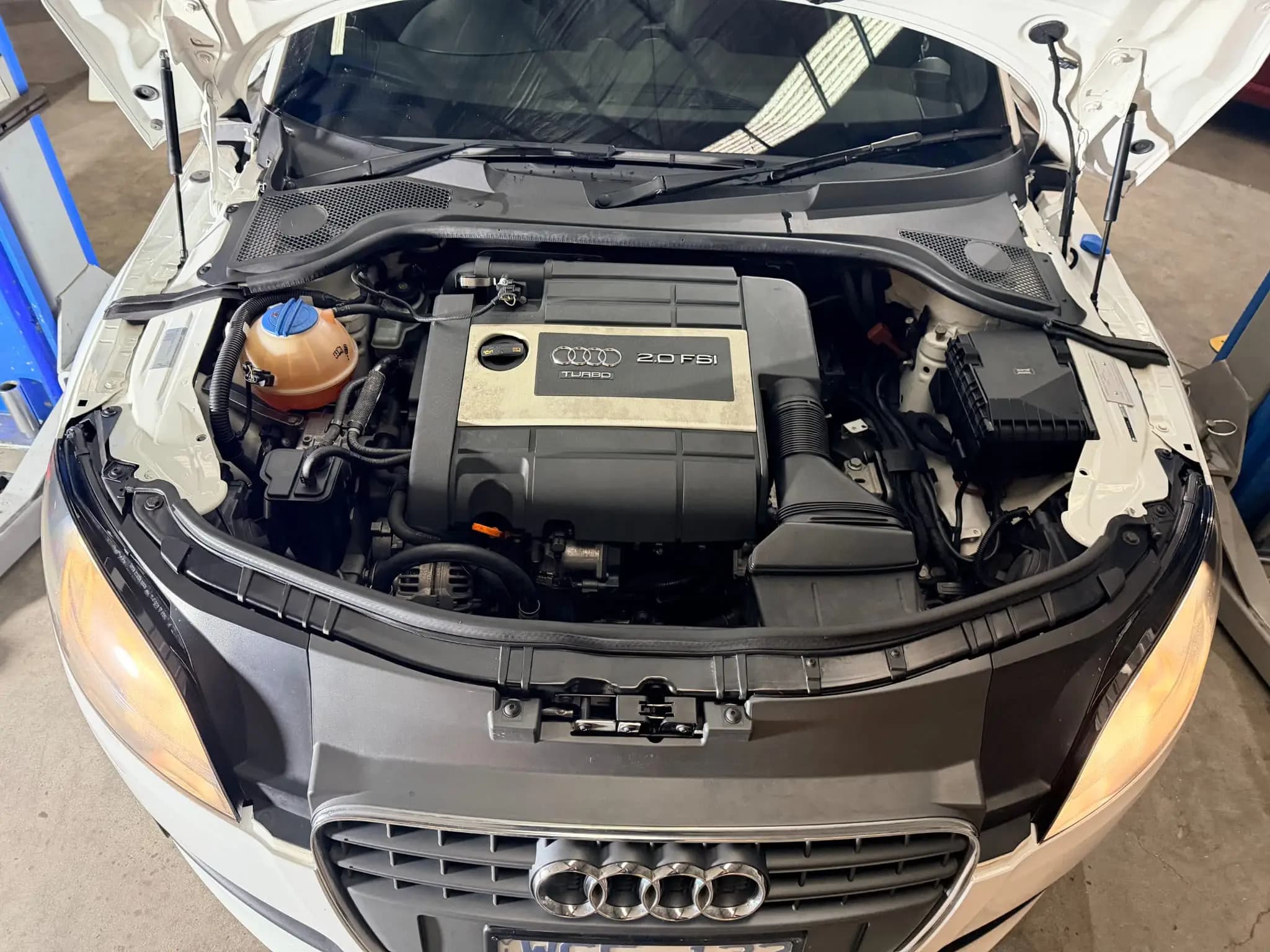
When an engine is beyond economical repair, we supply and fit a new or reconditioned unit, transfer the ancillaries, and complete the fluids, programming and road testing before handover. Gearbox work ranges from component repairs through to full-unit replacement.
Either way you get a written quote first. Work begins only when you approve it.